
You Are Not God Over Your Child.
A hard, necessary, and overdue conversation about how African parents wound their children in the name of culture, and why God never authorized it.
COUNTER CULTURAL MINDSET
Benedict Gborkorquellie
4/14/202612 min read
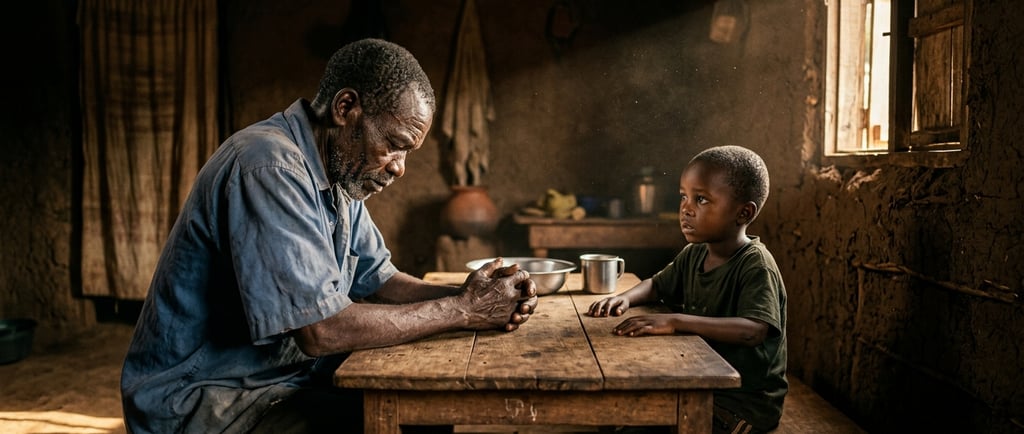
You Are Not God Over Your Child.
A hard, necessary, and overdue conversation about how African parents wound their children in the name of culture, and why God never authorized it.
A NECESSARY CONFRONTATION | CULTURAL ACCOUNTABILITY | FAITH & FAMILY
There is a wound that millions of African children carry into adulthood. Not from the streets, not from strangers, not from enemies. From the very people who were supposed to be their first sanctuary: their parents. And the cruelest part? Most of those parents have never once been told that what they did was wrong. In fact, they were applauded for it.
This article is not an attack on African culture. It is an intervention on a specific, dangerous distortion that has been smuggled into culture and dressed up as discipline, respect, and love. It is time to name it plainly: it is abuse of authority. And it is destroying generations.
Provision Does Not Purchase the Right to Destroy
Let us start with the most common justification: "I put food on the table. I pay school fees. I gave you a roof." And so, in that same breath, some parents believe they have earned the right to humiliate, belittle, yell, mock, and crush their children in front of aunties, uncles, cousins, and guests, with zero consequence.
But think carefully about what this logic actually says. It says a child is a transaction. It says love is a debt. It says dignity must be purchased, and since the parent is the purchaser, the child owns nothing. Not their feelings, not their self-image, not their voice.
This is not African wisdom. This is a lie that has been called culture for so long that it has started to feel like truth.
Studies published in Child Abuse & Neglect (WHO-affiliated, 2021) show that emotional abuse, including public shaming, harsh criticism, and consistent invalidation of a child's feelings, produces the same measurable psychological damage as physical abuse. This includes elevated rates of depression, anxiety disorders, and complex PTSD in adulthood. The absence of bruises does not mean the absence of harm.
You cannot fund someone's survival and simultaneously demolish their humanity. Those two things cancel each other. A child who is fed but consistently shamed does not experience love. They experience confusion, then numbness, then deep internalized shame that follows them into every relationship they will ever have.
"Your child is not property. They are a person placed in your care, temporarily, by God Himself."
God Never Gave You That Authority
Many parents invoke God's name to justify their behaviour. "Honour your father and mother" -- yes, that scripture is real. But they conveniently stop reading a few pages earlier, where God speaks directly to parents:
"Fathers, do not provoke your children to anger, but bring them up in the discipline and instruction of the Lord."
EPHESIANS 6:4 (ESV)
"Fathers, do not embitter your children, or they will become discouraged."
COLOSSIANS 3:21 (NIV)
The Greek word used for "provoke" in Ephesians is parorgizo. It means to arouse to wrath, to stir up deep anger. God is specifically warning parents: do not use your authority in a way that breeds resentment, bitterness, and rage in your child. He saw this coming. He named it. He prohibited it.
Colossians goes further. To "embitter" your child means to do things that leave a lasting bitter residue on their spirit. Public humiliation embitters. Constant criticism without encouragement embitters. Yelling as a primary form of communication embitters. Denying a child the right to explain themselves embitters.
"See that you do not despise one of these little ones. For I tell you that their angels in heaven always see the face of my Father in heaven."
MATTHEW 18:10 (NIV)
Jesus assigned angels to children. He said to be very careful how you treat them because Heaven is watching. That is not a small statement. That is God drawing a direct line of accountability over every parent who treats their child as less than human.
Why Do You Destroy Your Child in Public?
Here is something that rarely gets said out loud: there is a particular cruelty in choosing to humiliate your child in front of others. In front of siblings. In front of extended family. At family gatherings. In front of their friends. And this is shockingly common in African households.
The child is laughed at. Mocked for their grade, their weight, their appearance, their choices, by their own parent, who is supposed to be their shield. And the aunties laugh. And the uncles nod. And the other children learn: this is how you treat people smaller than you.
The Journal of Abnormal Child Psychology confirms that public shaming by a caregiver is one of the most psychologically damaging forms of emotional abuse because it attacks identity at its root. Children internalize the message: "I am someone who deserves to be humiliated." This belief, formed before age 12, reshapes their entire self-concept and affects performance, relationships, and mental health across a lifetime.
A child who is never defended by their own parent learns one devastating lesson: I am not worth defending. And they will spend decades trying to prove that wrong, through overachievement, people-pleasing, toxic relationships, or self-destruction.
The parent? They have never been held accountable. In fact, they received applause. Because culture called it discipline. Culture called it "keeping the child humble." But God has another word for it.
"Keeping a child humble does not require breaking their spirit. That is not discipline. That is damage."
You Raised a Voiceless Adult, Not a Respectful One
In many African homes, children are trained from birth: do not speak back, do not question, do not explain yourself, sit down, be quiet, adults are always right.
And this is presented as respect. But it is not respect. It is silence enforced through fear. And fear is not a foundation for respect. Fear is a foundation for resentment, for hidden anger, for children who become adults who cannot advocate for themselves, who cannot set boundaries, who accept abuse in romantic relationships because they were trained from childhood that they have no voice.
The American Psychological Association links authoritarian parenting styles, characterized by high demand, low warmth, and zero tolerance for the child's perspective, to poorer social competence, lower self-esteem, and higher rates of depression and anxiety, particularly in children from collectivist cultural backgrounds. The effect is not discipline. The effect is suppression.
Real respect is taught, not forced. A child who understands why certain behaviours are expected, who has been talked to as a thinking, feeling human being, develops genuine respect. A child who was simply threatened into compliance develops fear, not respect. The moment that threat disappears, when they turn 18, when they leave home, so does their so-called respect.
This is why so many African adults are estranged from their parents in silence. Not because they are rebellious. But because they were never given a real relationship, only a power structure.
What You Are Actually Passing Down
Your children are watching everything. Not just what you say. What you do. How you treat them. How you speak to them. And they are taking notes, not consciously, but neurologically. Their brains are being wired by your patterns.
The child who watches their father yell and never apologize learns: power means never saying sorry.
The child who is never validated learns: emotions are weakness.
The child who is shamed publicly learns: love comes with humiliation.
The child who is never defended learns: I am not worth protecting.
The child who was never allowed to speak grows up unable to communicate in healthy relationships.
"Train up a child in the way he should go; even when he is old he will not depart from it."
PROVERBS 22:6 (ESV)
This verse is quoted constantly to encourage discipline. But read it again with full awareness: whatever you train them in, they will carry it. If you train them in shame, they carry shame. If you train them in silence, they carry silence. If you train them in the belief that they are unworthy of respect, they will live as if they are unworthy of respect. The scripture is a warning as much as it is a promise.
You are not just raising your child. You are writing the script for how they will raise their children. And for how they will allow others to treat them. This is the true weight of your authority as a parent. It demands reverence, not recklessness.
"I Am Sorry" Is Not a Weakness
Perhaps the most suffocating reality in African parent-child dynamics is this: the parent never apologizes. Not once. Ever. For anything. And this is not just a cultural habit. It is treated as a virtue. Parents believe that apologizing to a child undermines their authority.
But what does the child actually experience? They experience this: no matter what is done to me, it will never be acknowledged. My pain does not matter enough for an apology. I must simply absorb whatever is given to me and call it love.
This produces adults who normalize being wronged without apology. Who accept mistreatment because they were never shown that an admission of fault is possible in a relationship with someone who has authority over you.
"Therefore, confess your sins to one another and pray for one another, that you may be healed."
JAMES 5:16 (ESV)
James does not say "confess your sins to one another, unless you are the parent." The instruction applies to every human being in relationship with another. A parent who wrongs their child, who yelled when they should have spoken, who shamed when they should have corrected privately, who struck in anger rather than in discipline, owes that child acknowledgement. Not as weakness. As integrity.
An apology from a parent to a child is one of the most powerful things a child can witness. It says: I am human. I am accountable. Even to you. You matter that much.
Broken People Raise Broken People, Unless the Cycle Is Interrupted
We have talked about what these parents do. Now we need to talk about why. Because if we stop at 'these parents are wrong,' we have diagnosed the symptom and walked away from the disease. The harder, more honest conversation is this: most parents who abuse their authority are not evil. They are wounded. And wounded people who have never addressed their wounds do not know how to love without inflicting them.
The father who screams at his son was probably screamed at. The mother who humiliates her daughter in front of the family was probably humiliated the same way by her own mother. The parent who cannot apologize was never apologized to. The parent who cannot validate their child's emotions was never taught that their own emotions were valid. They are not operating from malice in most cases. They are operating from the only script they were ever given. And because no one challenged that script, they handed it down as inheritance rather than examining whether it was injury.
This is the generational pattern that scripture addresses plainly. Not a supernatural fog that floats through families, but a very natural, very human cycle: broken behaviour that is normalized, never questioned, and therefore repeated, until someone decides to stop.
"The fathers have eaten sour grapes, and the children's teeth are set on edge."
EZEKIEL 18:2 (ESV)
God actually addresses this proverb in Ezekiel 18 to correct it. He says that each person is accountable for their own choices, that the cycle does not have to continue. But the cycle will only stop when the person living it is willing to see it clearly, name it honestly, and do the work of changing it. That requires something most of these parents have never been invited to do: look inward.
And here is the hard truth about looking inward when you have been raised to never question authority: it feels like betrayal. It feels like dishonoring your parents to say what they did to you was wrong. It feels like weakness to admit you are carrying pain that you have been passing on to your children. African culture, beautiful as it is in so many ways, has not historically created space for that kind of honest self-examination. Strength was performing. Strength was enduring. Strength was never letting them see you broken. But that version of strength is costing the next generation their wholeness.
Longitudinal research published in Development and Psychopathology shows that unresolved parental trauma, including childhood abuse, neglect, and chronic emotional invalidation, significantly increases the likelihood of similar parenting behaviours in the next generation. Critically, the research also confirms that this cycle is breakable: parents who engage in deliberate self-reflection and receive appropriate support demonstrate measurably different parenting behaviours, even when their own upbringing was harmful. The wound is not the final word.
"You cannot train a child in something you yourself have never learned. The gap in what you give them begins with the gap in what was given to you."
You Cannot Give What You Were Never Given, Unless You Go Get It
Acknowledging your wounds does not automatically excuse what you do with them. The moment you understand that your child is a full human being with feelings, needs, dignity, and a God-given identity to protect, you have also accepted responsibility to do whatever it takes to become the parent that child needs. Even if it requires unlearning everything you were taught.
Proverbs 22:6 says "train up a child in the way he should go." But there is a prerequisite embedded in that command that almost no one preaches on: you must first know the way. You must have walked it, or be actively walking it, before you can lead someone else down it. A parent who has never learned how to manage their own anger cannot teach a child emotional regulation. A parent who has never experienced healthy conflict resolution cannot model it. A parent who has never had their own worth affirmed cannot pour genuine affirmation into a child. The training you give will always be limited by the training you have received, unless you deliberately go and get more.
"For lack of guidance a nation falls, but victory is won through many advisers."
PROVERBS 11:14 (NIV)
This is one of the greatest disservices African parents do to their children: refusing to be equipped. Refusing to read. Refusing to seek counsel. Refusing therapy because we do not do that. Refusing to attend a parenting class because I raised five children and they turned out fine. Refusing to listen when someone points out a harmful pattern because the very suggestion feels like an attack on their identity.
But the question is not whether you survived your own upbringing. The question is whether your child is thriving under yours.
Most parents who cause this kind of damage believe they are right. They believe this is simply how it is done. They believe correction must come with humiliation to be effective, that love does not require explanation or gentleness. These beliefs are sincere. They are also demonstrably wrong. And sincerity does not protect a child from the damage that wrong belief causes.
Change is possible. But it requires something countercultural in the African parenting tradition: humility. The willingness to say, I do not have all of this right. The willingness to sit under teaching, to read, to consider that the way you were raised might not be the only way, or even the right way. The willingness to look at your child and ask, with genuine openness: did I hurt you? And then to sit in the discomfort of the answer without becoming defensive.
"Listen to advice and accept instruction, that you may gain wisdom in the future."
PROVERBS 19:20 (ESV)
That is not weakness. That is the most courageous thing a parent can do. It means admitting that love alone, without wisdom and without healing, is not always enough. It means stepping down from I am the parent therefore I am right, and standing in the far more powerful and honest place of: I am still learning how to do this well, and my child deserves me to keep learning.
Your children are not asking you to be perfect. They are asking you to be present, to be aware, and to be willing to grow. That willingness is what breaks the cycle.
To the Parent Reading This in Resistance
If you have been reading this with your defenses up, if something in you is saying "this is disrespectful" or "children today are too soft" or "this is Western nonsense," I want to speak directly to that resistance.
The discomfort you feel right now is not evidence that this is wrong. It may be evidence that this is deeply right. Because truth that has been buried long enough feels threatening when it surfaces. And if your first instinct is to protect the system rather than protect the child, that instinct is worth examining.
Ask yourself honestly:
Do your adult children genuinely want to be around you, or do they visit out of obligation?
Can they tell you the truth, or do they tell you what keeps the peace?
Do they carry joy, confidence, and security, or anxiety, self-doubt, and a constant need to prove themselves?
If they are struggling emotionally, did you contribute to that? Have you ever asked?
When is the last time you told them you were proud of them, simply for being who they are?
These are not comfortable questions. They are necessary ones. And the willingness to sit with them honestly, that is where healing begins. Not just for your children. For you. Because many of you were parented this way too. And you carry wounds you have never named.
It Is Not Too Late to Rebuild
This article is not written to condemn parents into paralysis. It is written to create enough discomfort that something shifts. Because African families have extraordinary strengths: deep community, resilience, sacrifice, and faith. These are real. And they do not have to come at the cost of the child's inner life.
A new generation of African parents is possible. Parents who correct without crushing. Who lead without dominating. Who hold standards without withdrawing love when those standards are not met. Who defend their children fiercely, not just from the world, but from their own worst moments. Who say "I was wrong" and mean it.
"And he will turn the hearts of fathers to their children and the hearts of children to their fathers."
MALACHI 4:6 (ESV)
This is a prophecy. It is also an invitation. The turning is possible. The repair is possible. The relationship between African parents and their children does not have to be defined by wounds passed silently from one generation to the next.
But it requires someone to break the cycle. It requires someone to be willing to be the first parent in their lineage to say: this stops with me.
"Your child came through you, not for you."
They are not your property. They are not your legacy project. They are not your emotional punching bag when life gets hard. They are human beings entrusted to your care by a God who is watching how you treat them. Handle them accordingly.
Written by Benedict Gborkorquellie | A Word for the Culture | Share Freely